


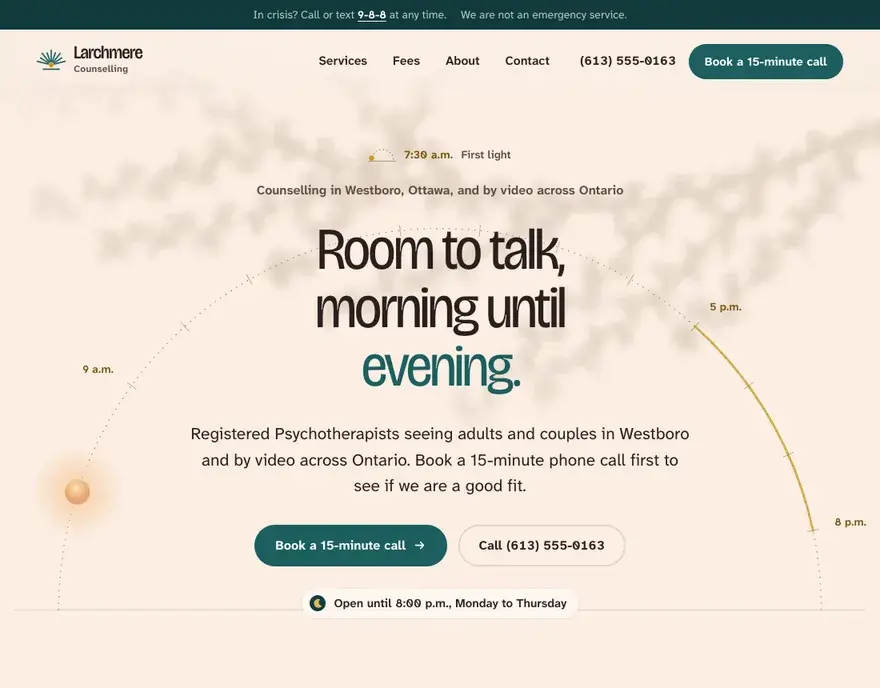
What clients look for on a therapist’s website
Your website helps a person who may be tired or anxious decide whether to contact you. Reaching out to a therapist is hard for many people, so the site should make each step small. Before they book, most people want to know:
- Whether you work with their concern, such as anxiety, grief, trauma or relationship problems.
- Who you are, with a real photo and a short bio in plain words.
- What a session costs and whether their health plan covers it.
- Whether you offer online sessions, evening times or a short first call.
- How to book without having to phone first.
Calm design matters here. We use soft colours, plenty of space, short paragraphs and one clear button on each page.
Privacy and PHIPA
In Ontario, most regulated therapists are health information custodians under the Personal Health Information Protection Act (PHIPA). Your website is one of the ways you collect information, so it has to follow the same rules as your files. The CRPO guide to PHIPA is a good plain-language summary. On the website, that means:
- A privacy page with the written public statement that section 16 of PHIPA requires. It describes your information practices and how clients can reach you with a privacy question or complaint.
- A named contact person for privacy questions, as section 15 describes. In a solo practice, that is you.
- A short contact form. Ask for a name, a way to reach the person and preferred times, and tell people not to share health details there.
- Intake forms and consent sent through practice software that stores data in Canada, such as Jane or Owl Practice.
- No advertising tracking pixels on booking or intake pages.
Advertising rules for psychotherapists
The College of Registered Psychotherapists of Ontario sets its advertising rules in Standard 6.2. They apply to your website, directory profiles and social media. Advertising must be truthful, accurate, factual and verifiable. A therapist website should avoid:
- Testimonials, star ratings or community “best of” awards. The CRPO explains why in its article on testimonials and awards.
- Superlatives or comparisons, such as “the most caring therapist in Ottawa”.
- Promises of results, such as “overcome anxiety in eight sessions”.
- Messages that play on fear or loneliness.
- Areas of practice you do not have verifiable training in.
Use the name that appears on the CRPO public register, with your title. If you are a Registered Psychotherapist (Qualifying), use that exact title. Social workers, psychologists and other therapists belong to other colleges with their own rules, and we follow the rules of the college you belong to.
Online booking, fees and insurance receipts
Some people look for a therapist late in the evening, when your office is closed. Online booking lets them pick a time for a first call or session right away. We connect the booking buttons to your practice software and set up separate booking types for a first call, individual sessions and couples sessions.
Most clients pay you and then claim the cost from their extended health plan. Plans differ on which titles they cover, and some do not cover an RP (Qualifying). Put your full name, title and registration number on every receipt, and say on your fees page which title appears on it. The Canada Revenue Agency confirms that psychotherapy services from practitioners licensed with the CRPO have been exempt from GST/HST since June 20, 2024, so your fees page can say that no HST is charged.


